

Tucked away in the hills of eastern Kentucky, Elliott County hides one of the state’s coolest geological secrets. Deep under the ground, rare rocks called peridotite dikes (also known as kimberlite) cut through ancient layers of coal and limestone. These rocks came from way down in Earth’s mantle, and they’ve fascinated scientists and rockhounds for more than 140 years.
Check out this short video for a fun, easy-to-follow look at how these dikes formed, what’s inside them, and why diamond hunters searched here for decades:
How These Rocks Got Here
Imagine hot melted rock (magma) starting deep in Earth’s mantle — the layer under the crust. Under huge pressure and heat, it rockets toward the surface and punches through older rock layers, creating long, narrow bands called dikes. Think of it like a giant knife slicing through a layer cake of coal, limestone, and shale that formed about 300 million years ago.
These dikes were first discovered in 1884 by geologist Albert R. Crandall. The next year, J.S. Diller wrote about them in a science magazine. The rock is a dark green type of peridotite. Over time, the main mineral (olivine) often changes into a softer material called serpentine.
What’s Inside the Rock?
The Elliott County kimberlite contains several interesting minerals:
- Olivine — the green mineral that gives the rock its color
- Pyrope garnet — red crystals
- Phlogopite — shiny mica flakes
- Ilmenite — a dark, heavy mineral
- Plus smaller amounts of other minerals like enstatite and calcite
Scientists also find chunks of other rocks (called xenoliths) that the magma picked up on its way to the surface.
The Diamond Hunt That Came Up Empty
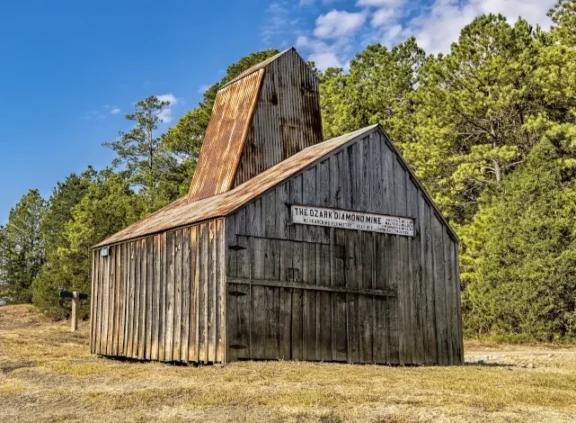
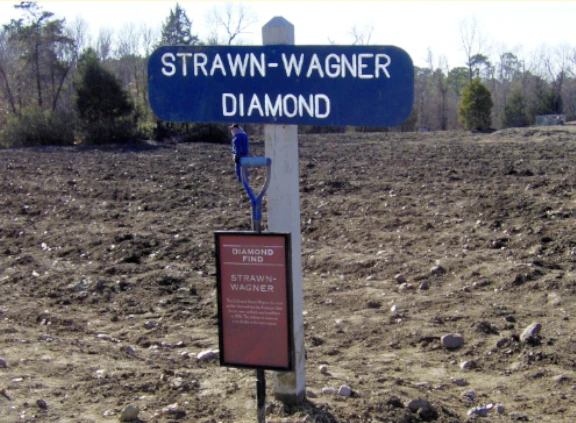
Kimberlites in places like South Africa and Arkansas sometimes contain diamonds, so people searched Elliott County hard for years. They dug shafts, sampled the rock, and even ran small mining operations. Despite all that work, no authenticated diamonds have ever been found here. The rocks are still valuable for science because they give us a rare look at material from deep inside the Earth.
Where Are They and Can You See Them?
The dikes are in a small area near Ison Creek and the Little Sandy River in Elliott County. They’re usually soft and weathered on the surface, so they’re not always easy to spot. Most of the land is private, so you’ll need permission if you want to visit. The Kentucky Geological Survey has maps and reports if you want to learn more.
These peridotite dikes are a great reminder that Kentucky has more going on underground than just coal and limestone. Next time you’re exploring eastern Kentucky, keep an eye out for these hidden geological wonders — they’re pure science gold.
Sources: Kentucky Geological Survey, historical Science magazine reports, and field studies of the Elliott County Kimberlite.
